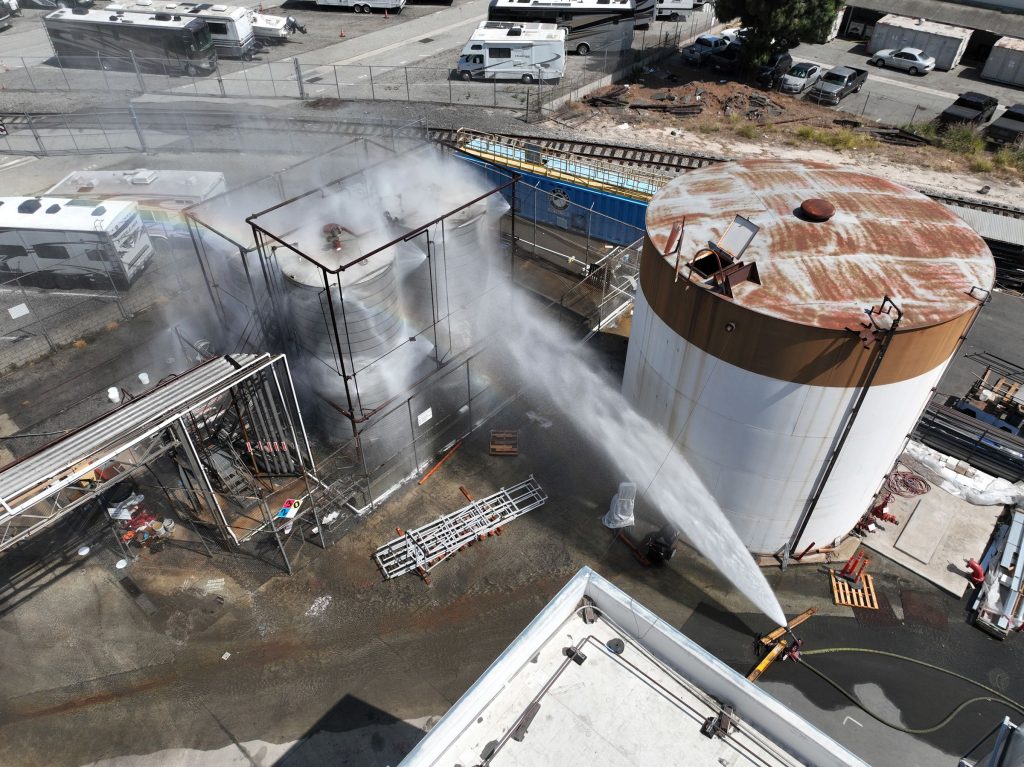
In Orange County, California, emergency crews are tirelessly working to prevent a potentially catastrophic explosion from an overheating tank filled with the chemical methyl methacrylate (MMA). Approximately 50,000 residents remain under evacuation orders as authorities attempt to stabilize the situation.
Evacuation and Emergency Response
The Orange County Fire Authority has been at the forefront of efforts to cool and neutralize the chemical, which is used in the manufacturing of plastics and can cause respiratory issues if inhaled. Initially, 79,000 residents were affected, but the evacuation zone was expanded after further assessments of the volatile situation.
Governor Gavin Newsom declared a state of emergency to facilitate a more robust response, including expanding shelter availability for those displaced. The Red Cross has set up evacuation shelters, although some are already at capacity, and additional facilities are being prepared.
Challenges and Safety Measures
Officials have been using drones to monitor the tank’s temperature, which has been rising despite initial hopes of cooling. The tank’s temperature reached 90 degrees, up from 77 degrees the previous day, raising concerns about a possible explosion. Emergency crews are racing against time to solidify the chemical from the outside inward, akin to an ice cube freezing.
Authorities have set up containment measures, including diking and damming with sand, to mitigate potential spills or explosions. The precise temperature at which the tank might ignite remains unknown, but officials are determined to prevent any damage to the community and environment.
Community Impact and Precautions
Residents in the most at-risk areas have been urged to evacuate immediately. The situation has also led to the closure of a voting center and ballot boxes in Garden Grove, with displaced residents encouraged to use other voting centers in the county.
Nearby attractions like Disneyland and Knott’s Berry Farm are monitoring the situation closely but remain operational as they are outside the evacuation zone. The Environmental Protection Agency is leading air monitoring efforts, and so far, no chemical has been detected in the air outside the evacuation zone.
Authorities continue to emphasize the importance of evacuation for those in affected areas, as the potential effects of an explosion remain unpredictable.
Original reporting: El Paso News (HLL/CB) — read the source article.