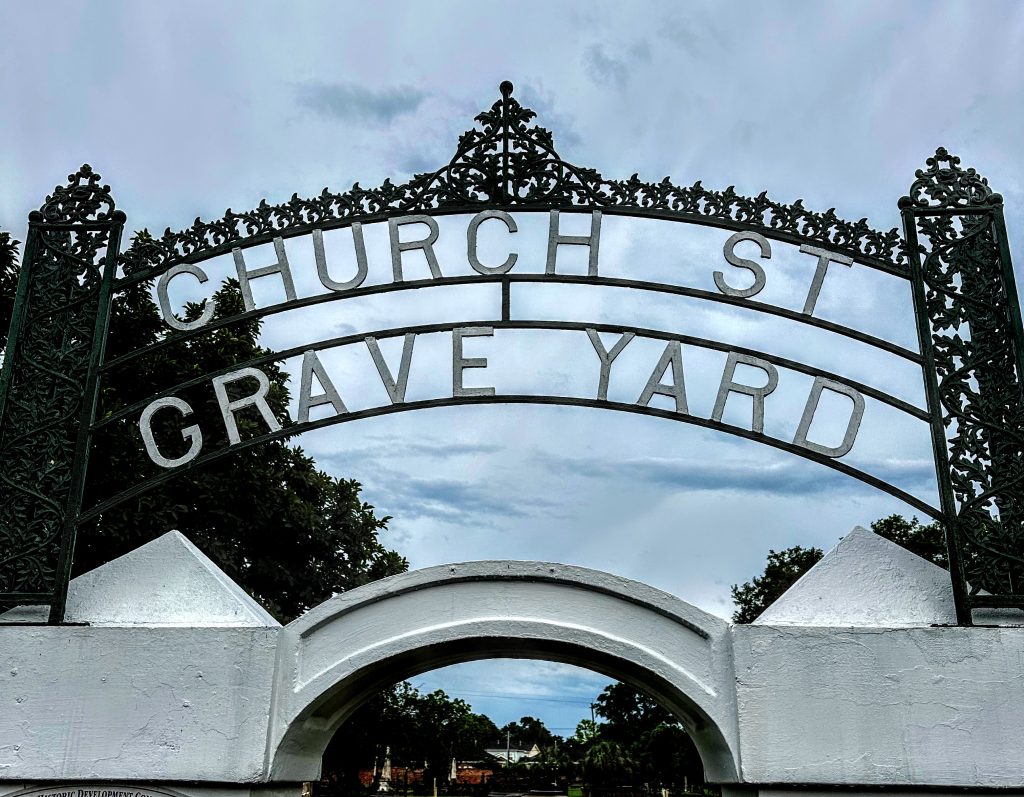
There are cemeteries, and then there is Church Street Cemetery — a place so layered with history, beauty, and quiet drama that a single visit will leave you rearranging your entire understanding of Mobile. Tucked into the heart of downtown, just south of Government Street in the Old Church Street neighborhood, this National Register of Historic Places site is one of the oldest municipal cemeteries in the entire country, and it is absolutely worth an afternoon of your time.
Founded in 1819, the same year Alabama achieved statehood, Church Street Cemetery spans roughly two city blocks and holds the remains of some of Mobile’s most consequential figures — governors, mayors, Civil War officers, yellow fever victims, free people of color, and early French and Spanish settlers. The sheer breadth of human story compressed into this single green space is staggering. Walking the brick-lined paths here feels less like a stroll and more like reading a novel with an enormous cast of characters.
What strikes you first is the architecture. The cemetery is filled with extraordinary 19th-century funerary art — towering obelisks, draped urns carved in marble, weeping angel statues, and ornate cast-iron fencing that surrounds family plots like miniature estates. Spanish moss hangs from live oaks that have been standing here for well over a century, and on a quiet weekday morning the light filters through the canopy in long, golden shafts. Bring your camera. Seriously, bring it.
One of the most poignant sections is the yellow fever ground, where hundreds of Mobile residents who perished in the devastating epidemics of the 1800s are buried in simple, closely spaced graves. Yellow fever killed in waves throughout the Gulf South, and Mobile was hit hard. Standing among those stones, you get a visceral sense of how precarious and courageous daily life must have been in an early American port city.
History enthusiasts will want to seek out the grave of Octavia Walton LeVert, a celebrated 19th-century socialite and writer who was one of the most prominent women of her era. Her presence alone makes this cemetery a pilgrimage stop for anyone interested in Southern literary and social history.
The cemetery is free to enter and open to the public during daylight hours. Parking is easy along Church Street, and the site is walkable from several downtown hotels and restaurants. There are no admission fees, no gift shops, no crowds jostling for selfie spots — just you, the moss, the marble, and two centuries of Mobile staring back at you.
Whether you are a history buff, a photography enthusiast, or simply someone who appreciates a place with genuine soul, Church Street Cemetery delivers something rare: a moment of genuine connection to the past. Mobile has always been a city that takes its history seriously, and this landmark is proof of exactly that.