All-in-One Broken Arrow Mosquito Prevention Guide
Summer weather in Broken Arrow brings backyard cookouts, outdoor sports, neighborhood events—and mosquitoes. While most mosquito bites are simply irritating, mosquitoes can also carry illnesses such as West Nile virus, making prevention an important part of protecting your family and neighborhood.
The City of Broken Arrow uses a targeted, science-based mosquito-control program that combines resident reports, mosquito trapping, laboratory testing, larvicide treatment, and spraying when established thresholds are met. Residents can strengthen those efforts by reducing standing water and taking practical steps to prevent bites.
How Broken Arrow Monitors Mosquito Activity
Broken Arrow does not automatically spray every neighborhood on a fixed schedule. Instead, the City investigates areas where residents report unusually high mosquito activity.
City crews may place mosquito traps in the reported area to determine the size and type of the mosquito population. Mosquitoes collected from those traps can then be submitted to the Tulsa Health Department for testing, including testing for West Nile virus.
According to the City, neighborhood spraying may be considered when one of the following conditions is met:
- A mosquito trap contains more than 100 mosquitoes.
- Laboratory testing detects West Nile virus.
This approach allows the City to focus treatment in areas where monitoring shows a measurable need rather than applying pesticides throughout the community unnecessarily.
Why Spraying Is Not the First Step
Spraying primarily targets adult mosquitoes that are already flying. Although it can reduce the adult mosquito population in a specific area, it does not eliminate eggs and larvae developing in standing water.
For that reason, mosquito prevention begins by stopping mosquitoes before they mature. Where standing water cannot be removed, crews may use larvicides that interrupt the mosquito life cycle.
Residents can make a major difference because many mosquito breeding sites are found around homes, patios, yards, garages, and businesses.
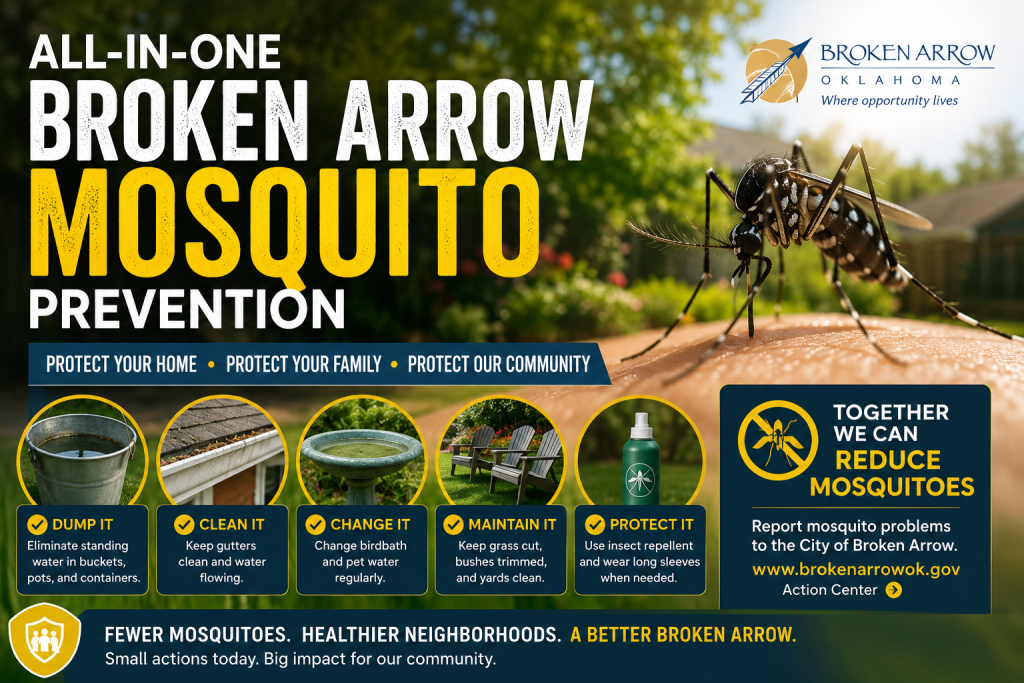
Remove Standing Water Around Your Property
Mosquitoes do not need a pond or large drainage area to reproduce. Some species can lay eggs in very small amounts of water. A forgotten bucket, clogged gutter, flowerpot tray, discarded tire, or children’s toy can become a breeding site.
Inspect your property after rainfall and regularly check the following areas:
- Buckets, barrels, wheelbarrows, and watering cans
- Flowerpots and plant saucers
- Children’s toys and play equipment
- Tarps, grill covers, and outdoor furniture covers
- Birdbaths and decorative fountains
- Pet water bowls
- Clogged rain gutters and downspouts
- Trash cans, recycling bins, and lids
- Old tires and unused containers
- Boats, trailers, and equipment stored outdoors
- Leaking faucets, hoses, and irrigation systems
- Pools, hot tubs, and pool covers
Empty or replace collected water at least once each week. Pet bowls should be refreshed more frequently, and swimming pools should remain properly treated and circulated.
Keep Your Yard Less Attractive to Mosquitoes
Mosquitoes often rest in shaded, humid vegetation during the day. Maintaining your yard can reduce the number of places available for them to hide.
- Keep grass trimmed.
- Remove weeds and unnecessary brush.
- Clear leaves and organic debris from drainage areas.
- Trim dense shrubs near patios, doors, and walkways.
- Improve drainage in areas where water repeatedly collects.
- Keep gutters clean and flowing properly.
Outdoor fans can also help around patios and seating areas because mosquitoes are weak flyers and have difficulty approaching people in steady airflow.
Protect Yourself From Mosquito Bites
Even with strong prevention efforts, eliminating every mosquito is unrealistic. Personal protection remains important, particularly during periods of heavy mosquito activity.
Health officials commonly recommend the following precautions:
- Use an EPA-registered insect repellent and follow the label instructions.
- Wear long sleeves, long pants, socks, and closed-toe shoes when practical.
- Use extra caution around dawn and dusk, when many mosquito species are active.
- Repair damaged window and door screens.
- Keep exterior doors closed when they are not being used.
- Use mosquito netting when protecting babies or small children outdoors.
Common active ingredients in registered repellents include DEET, picaridin, IR3535, oil of lemon eucalyptus, para-menthane-diol, and 2-undecanone. Parents should carefully follow age restrictions and application directions listed on the product.
Know the Signs of West Nile Virus
Most people infected with West Nile virus do not develop symptoms. Some may experience fever, headache, body aches, joint pain, vomiting, diarrhea, fatigue, or a rash.
A much smaller number of people may develop severe neurological illness. Older adults and people with certain medical conditions may face a greater risk of serious complications.
Anyone experiencing concerning or severe symptoms after mosquito exposure should contact a qualified healthcare provider.
How to Report a Mosquito Problem in Broken Arrow
Residents who notice unusually heavy mosquito activity can submit a mosquito-control request through the City of Broken Arrow’s Action Center. A report allows city staff to investigate the location and determine whether trapping, testing, larvicide treatment, or another response is appropriate.
When submitting a report, provide as much detail as possible, including:
- The exact location of the mosquito problem
- The time of day when activity is greatest
- Whether standing water is present nearby
- How long the problem has continued
- Any drainage, abandoned-pool, or property-maintenance concerns
What Residents Can Expect if Spraying Is Approved
If trapping or testing meets the City’s treatment criteria, mosquito-control products may be applied in the affected area. The City states that treatments are performed in a targeted manner and followed by an inspection for possible unintended effects on wildlife.
Residents who have questions about a scheduled treatment, health concerns, pets, beehives, gardens, or other sensitive areas should contact the City for current instructions.
The City also provides an annual opt-out process for residents who do not want mosquito spraying near their property. Because policies and procedures may change, residents should verify the current requirements directly with the City.
A Neighborhood-Wide Mosquito Prevention Plan
Mosquito prevention works best when several nearby properties participate. One carefully maintained yard can still experience mosquitoes breeding in containers, gutters, pools, or drainage areas next door.
Neighborhood associations, churches, schools, apartment communities, and businesses can help by scheduling routine property inspections and reminding residents to empty standing water after storms.
A simple community plan can include:
- Inspect outdoor areas after every significant rainfall.
- Empty or treat standing water within several days.
- Clean gutters and drainage channels regularly.
- Report abandoned pools or severe drainage problems.
- Encourage residents to use repellent during outdoor events.
- Report unusually high mosquito activity to the City.
The Bottom Line
Broken Arrow’s mosquito-control strategy depends on surveillance, testing, targeted treatment, and cooperation from residents. Spraying can be useful when mosquito counts or disease testing justify it, but the most effective long-term defense begins with removing breeding sites.
By emptying standing water, maintaining yards, using appropriate insect repellent, repairing screens, and reporting serious mosquito activity, Broken Arrow residents can reduce mosquito populations and help protect the entire community.
Sources: City of Broken Arrow mosquito-control information, Tulsa Health Department mosquito guidance, Centers for Disease Control and Prevention, and U.S. Environmental Protection Agency insect-repellent guidance.