There is a moment — and if you visit the Institute of Contemporary Art on Boston’s waterfront, you will know exactly what I mean — when you walk across the cantilevered upper gallery and the entire harbor opens up beneath your feet. The floor is glass. The Atlantic is below you. And somewhere behind you, a painting the size of a living room wall is quietly demanding your attention. That is the ICA in a nutshell: bold, disorienting in the best possible way, and completely unlike anywhere else in the city.
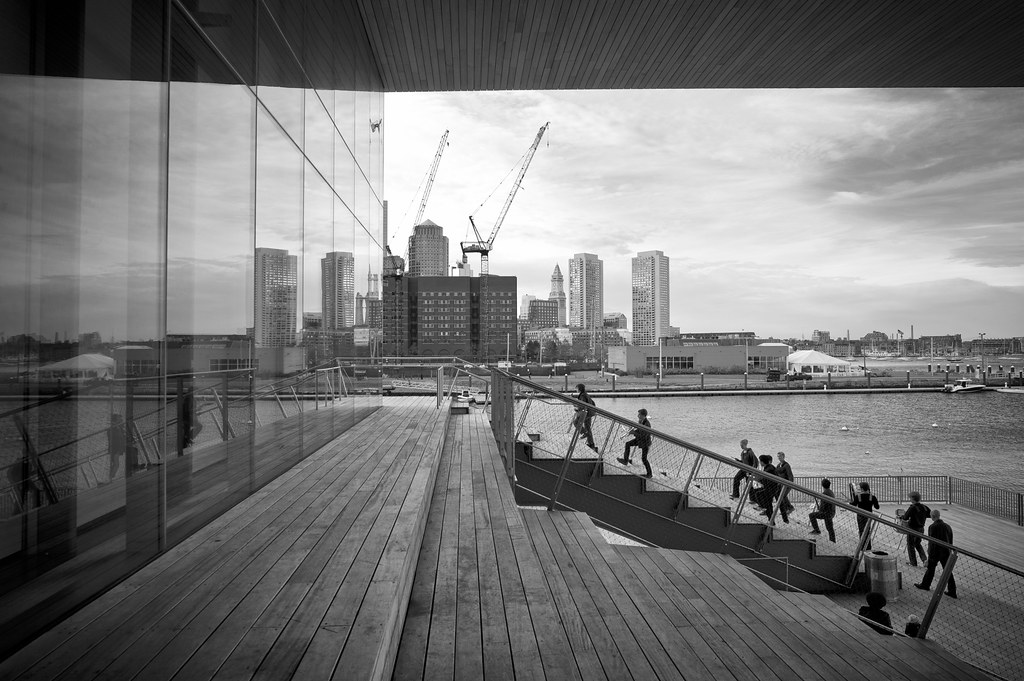
The ICA sits in the Seaport District, Boston’s most dramatically transformed neighborhood over the past two decades. Getting there is part of the pleasure. You can walk from South Station in about fifteen minutes along the waterfront, or hop the Silver Line right to the door. Either way, when the building comes into view — that dramatic steel-and-glass box cantilevered out over Fan Pier — you already understand that this place takes its architecture as seriously as its art.
The permanent collection, called the Founders Gallery, is a genuine strength. Works by Kara Walker, Nan Goldin, Edward Ruscha, and Cornelia Parker anchor it, and the curators rotate pieces thoughtfully enough that returning visitors reliably find something new. But the ICA has always been at its most electric with temporary exhibitions. The museum built its reputation on introducing Boston audiences to artists they had never heard of — and then watching those artists go on to define a generation. It has a real eye, and you feel that the moment you step inside.
One practical note: Thursday evenings, the museum stays open until nine o’clock and offers reduced admission. The crowds thin out, the light over the harbor goes golden, and the whole experience becomes something closer to a private tour than a museum visit. If your schedule allows it, that is the window to aim for.
The ground-floor MediaLab is worth seeking out, especially if you are traveling with curious teenagers or anyone who thinks contemporary art is not for them. Interactive installations and digital works tend to live here, and the space has a way of pulling people in who walked through the door skeptical and walking out genuinely moved.
Do not overlook the waterfront plaza outside, either. On a clear day, the view back toward downtown Boston across the harbor is as good as any in the city, and it costs nothing at all. Grab a coffee from the museum’s cafe, find a bench on the pier, and let the skyline do its work.
Boston is a city that wears its history proudly, sometimes to the point of letting the present feel like an afterthought. The ICA is the counterargument to all of that — a place that insists the most interesting story is always the one being written right now. Go see what they mean.